


In petroleum refining, removing fine catalyst particles from FCC and RFCC slurry oil can be a challenging process. These fine solids may affect downstream processing, product quality and equipment operation.
One specialized approach uses glass beads in an electrostatic separation system. Unlike conventional filtration media, these beads serve as part of an electrically active separation process designed to capture catalyst fines from hydrocarbon streams.
For this application, ordinary glass bead specifications may not be sufficient. Material properties, electrical characteristics, particle size distribution and operating conditions all need to be considered.
This article explains how glass beads are used in RFCC electrostatic separation, which properties matter, and what buyers should confirm when evaluating a suitable glass bead supply.
1. What Is RFCC Electrostatic Separation?
RFCC stands for Residue Fluid Catalytic Cracking, a refinery process used to convert heavier hydrocarbon feedstocks into more valuable products.
During the cracking process, fine catalyst particles can become entrained in the process stream. Some of these particles remain in the slurry oil, also known as decant oil or clarified slurry oil feedstock.
If catalyst fines are not adequately removed, they may affect downstream applications and the quality of the recovered oil.
Electrostatic separation is one technology used to address this challenge.
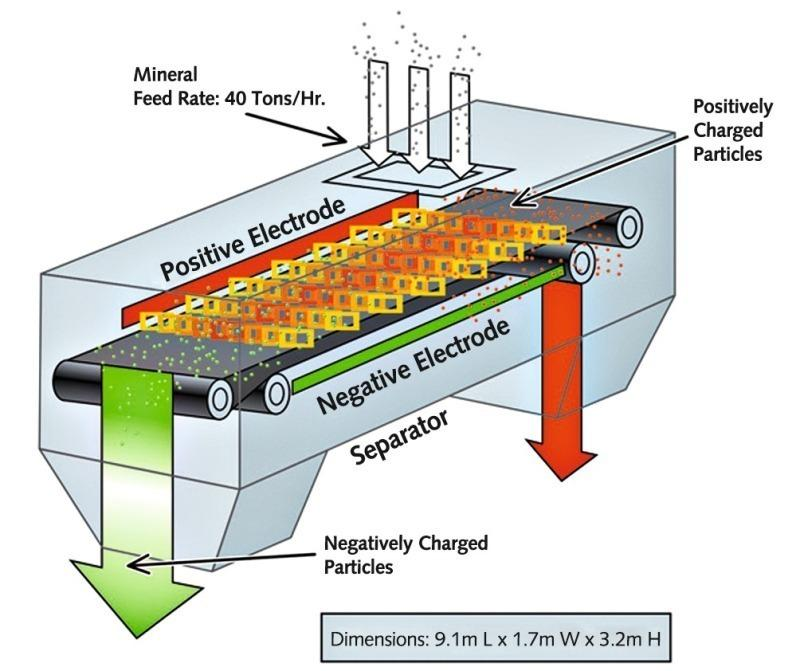
In a bead-bed electrostatic separator, the process stream passes through a bed of specially selected glass beads located within an electrical field. The beads become polarized under the applied field, creating conditions that help attract and capture fine solid particles.
The collected particles can subsequently be removed through a cleaning or backflushing cycle, depending on the separator design.
This process is different from simply passing slurry oil through an ordinary mechanical filter. The electrical properties of the bead material are part of the separation mechanism.
2. Why Are Glass Beads Used in Electrostatic Separators?
Glass beads can provide a stable, granular structure within the separation chamber.
Their role is not simply to act as a physical barrier. Under an applied electrical field, the dielectric properties of the glass help establish the conditions required for electrostatic particle capture.
Several characteristics make glass beads relevant to this type of application.
Electrical Resistivity
Electrical resistivity is an important property when evaluating glass materials for electrostatic separation.
It describes how strongly a material resists the flow of electrical current. In an electrostatic bead bed, the electrical behavior of the beads influences how they respond to the applied field.
The required resistivity should be evaluated under relevant operating conditions, particularly at elevated temperatures.
A room-temperature measurement alone may not be sufficient to establish suitability for a high-temperature process.
Dielectric Properties
Glass is an insulating material with dielectric properties.
When exposed to an external electrical field, a dielectric material can become polarized. This behavior is relevant to the electrostatic separation mechanism used in bead-bed systems.
The actual performance depends on the material properties, electrical conditions, bead arrangement and process environment.
Particle Shape and Surface Condition
Glass bead shape can influence how particles pack together inside the separator.
Roundness, diameter consistency and surface condition may affect the structure of the bead bed and the available flow paths.
These properties should be evaluated together rather than treated as independent guarantees of separation performance.
Thermal and Chemical Stability
RFCC slurry oil can operate at elevated temperatures and under demanding chemical conditions.
Glass beads intended for this environment need to be evaluated for their ability to maintain relevant properties during operation.
Important considerations include thermal stability, chemical compatibility and changes in electrical properties at operating temperature.
3. Key Requirements for RFCC Glass Beads
Glass beads for RFCC electrostatic separation require a more application-specific evaluation than ordinary industrial glass beads.
The following properties should be considered when defining a product specification.
Particle Size Distribution
Particle size distribution is important because the beads form a packed structure inside the separator.
The size range can influence:
- Packing arrangement
- Void spaces between beads
- Process flow through the bead bed
- Contact conditions within the separation chamber
A narrow or specially controlled particle size distribution may be required depending on the separator design.
Buyers should provide the required size fractions and acceptance limits rather than specifying only a nominal diameter.
Electrical Resistivity at Operating Temperature
Resistivity should be evaluated at temperatures relevant to the actual process.
Glass materials can exhibit changes in electrical behavior as temperature increases. Therefore, material selection should not rely only on room-temperature resistivity data.
For demanding applications, the supplier should clarify the test temperature, measurement method and available supporting data.
Density and Material Composition
Density and glass composition are additional factors to consider.
They may influence material selection, handling and the physical behavior of the bead bed.
The required composition should be determined according to the electrical, thermal and chemical requirements of the application.
Sphericity and Surface Quality
A consistent bead shape can help maintain a more predictable packed structure.
Buyers may need to specify:
- Diameter tolerance
- Roundness or sphericity
- Surface defects
- Visible inclusions
- Batch consistency
The acceptable criteria should be agreed according to the separator design and technical requirements.
Thermal Stability
The glass beads must be evaluated under the intended operating temperature range.
Relevant considerations include dimensional stability, thermal expansion and whether the material maintains the required electrical characteristics during operation.
A product should not be considered suitable for high-temperature service based on its general glass classification alone.
4. How Do Glass Beads Capture Catalyst Fines?
The basic mechanism involves the interaction between the glass bead bed, the applied electrical field and fine solid particles carried by the slurry oil.
A simplified process can be described in four stages:
Stage 1: Slurry oil enters the separator
The slurry oil containing catalyst fines flows into the separation chamber.
Stage 2: The glass bead bed is exposed to an electrical field
The applied electrical field polarizes the dielectric glass beads.
Stage 3: Catalyst fines are captured
The resulting non-uniform electrical conditions help attract fine particles toward the bead surfaces, allowing them to accumulate within the bead bed.
Stage 4: The bead bed is cleaned
Depending on the system design, a backflushing or cleaning cycle removes accumulated catalyst fines so the separation process can continue.
The exact operating sequence, electrical conditions and cleaning procedure depend on the separator manufacturer and system configuration.
5. What Should Buyers Consider When Selecting RFCC Glass Beads?
Selecting glass beads for an electrostatic separator requires more than matching the particle size of an existing product.
Buyers should consider the following information before confirming a specification.
| Parameter | Why It Matters |
|---|---|
| Particle size distribution | Influences bead packing and flow paths |
| Electrical resistivity | Relevant to the response of the glass under an electrical field |
| Resistivity at temperature | Helps evaluate electrical behavior under operating conditions |
| Glass composition | Affects electrical, thermal and chemical properties |
| Density | Provides additional material information |
| Sphericity | Helps characterize bead shape and packing consistency |
| Surface condition | Helps identify defects and irregularities |
| Thermal stability | Relevant to elevated-temperature operation |
| Inspection documentation | Supports verification against agreed specifications |
The required values should be based on the separator design, process conditions and the technical requirements of the equipment manufacturer.
There is no universal specification that can be applied to every RFCC electrostatic separator.
6. Information Needed for a Technical Evaluation
When requesting glass beads for an RFCC electrostatic separation system, it is useful to provide the following information:
- Separator information: Equipment manufacturer, model and module configuration.
- Existing media reference: Current bead type, supplier or reference product, if available.
- Particle size distribution: Required size fractions and acceptance limits.
- Operating temperature: Normal operating range and maximum temperature.
- Process flow rate: Normal and maximum slurry oil flow.
- Electrical requirements: Required resistivity or other relevant electrical properties.
- Material requirements: Glass composition, density and thermal stability expectations.
- Quality requirements: Roundness, surface condition and inspection criteria.
- Trial quantity: Sample quantity required for laboratory evaluation or equipment testing.
Existing product samples, technical data sheets or inspection reports can also help the manufacturer understand the target specification.
Where some information is unavailable, the initial discussion can focus on identifying the missing parameters before product development begins.
7. Why Sample Testing Is Important
For specialized industrial applications, a product description or nominal specification alone cannot establish full compatibility.
A glass bead may have a suitable particle size but still differ in electrical resistivity, thermal behavior or material composition.
For this reason, sample evaluation is an important step when developing or qualifying an alternative glass bead supply.
A practical evaluation process may include:
- Reviewing the existing product specification
- Comparing particle size distribution
- Evaluating glass composition and density
- Measuring electrical resistivity at relevant temperatures
- Inspecting bead shape and surface condition
- Conducting application-specific testing where required
The test methods and acceptance criteria should be agreed with the equipment owner or technical team.
A successful material comparison should be supported by test results rather than assumptions based on appearance or nominal size.
8. Discuss Custom Glass Bead Requirements with GlassBeadTech
Glass beads used in RFCC electrostatic separation are a specialized industrial material. Their suitability depends on a combination of particle size, electrical characteristics, glass composition, thermal stability and application conditions.
At GlassBeadTech, we focus on glass bead manufacturing and customized product requirements for industrial and technical applications.
For projects involving electrostatic separation, we welcome technical discussions based on existing product references, particle size specifications, operating conditions and material requirements.
Our technical team can review the available information and evaluate the feasibility of developing a glass bead specification for your application.
Contact GlassBeadTech to discuss your specialty glass bead requirements.
Frequently Asked Questions
What are glass beads used for in RFCC electrostatic separation?
They form a dielectric bead bed inside an electrostatic separator. Under an applied electrical field, the polarized beads help capture fine catalyst particles from slurry oil.
Why is electrical resistivity important for electrostatic separator glass beads?
Electrical resistivity influences how the glass responds to an applied electrical field. Its behavior at operating temperature is particularly relevant when evaluating glass for high-temperature separation systems.
Can ordinary industrial glass beads be used in RFCC electrostatic separators?
Not necessarily. Ordinary glass beads may not meet the electrical, thermal, particle size and material requirements of a specialized separator. Suitability needs to be confirmed through technical evaluation.
What particle size is required for RFCC glass beads?
The required particle size distribution depends on the separator design and existing media specification. Buyers should provide the required size fractions and tolerances.
Can alternative glass beads replace an existing H52-type product?
A reference product such as an H52-type bead can provide a starting point for comparison. However, an alternative should not be considered equivalent until its relevant material properties and application performance have been evaluated.
What information is needed to develop custom RFCC glass beads?
Important information includes the existing product reference, particle size distribution, operating temperature, process flow rate, electrical requirements, material properties and inspection criteria.