

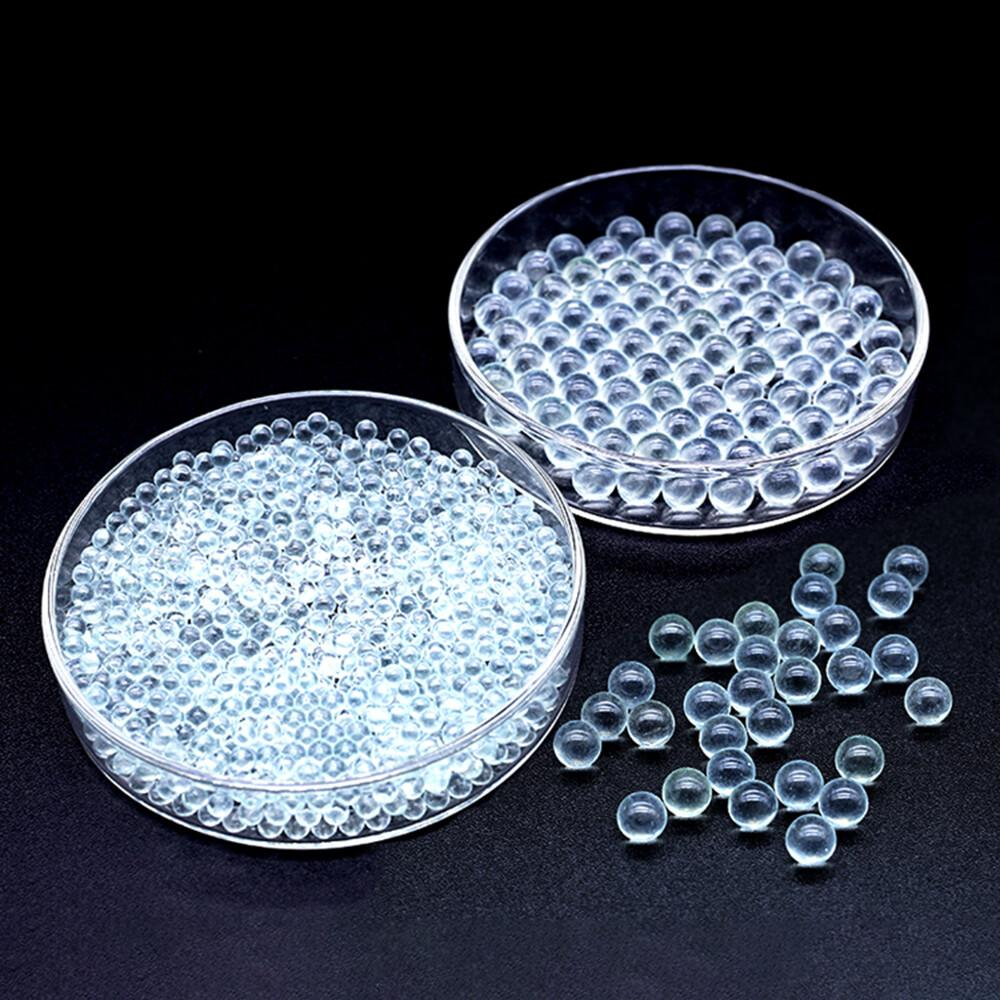
Precision glass beads are spherical glass components used in applications where particle size, shape, surface quality and material properties need to meet specific requirements. Depending on the application, they may be used in optical systems, laboratory equipment, industrial processes and specialized technical applications.
Unlike ordinary glass beads used mainly for decorative purposes or general surface treatment, precision glass beads are selected according to defined specifications. These may include diameter, dimensional tolerance, roundness, surface condition and glass composition.
This guide explains what precision glass beads are, which properties matter most, where they are used and what buyers should consider when selecting a suitable product.
What Makes Glass Beads Precision Products?
The term precision glass beads generally refers to glass spheres manufactured or selected to meet specific dimensional or quality requirements. However, there is no single specification that applies to every precision glass bead. The required level of precision depends on the intended application.
Several factors are worth considering.
1. Diameter and Dimensional Tolerance
The diameter of a glass bead affects how it fits into an assembly or performs within a process. Some applications require a narrow diameter range, while others can accommodate a wider distribution.
When purchasing precision glass beads, it is important to distinguish between nominal diameter, actual diameter range and dimensional tolerance. These terms describe different aspects of the product specification.
For applications involving matched components or controlled spacing, dimensional consistency may be particularly important.
2. Roundness and Sphericity
A glass bead may have the correct nominal diameter but still differ in shape from an ideal sphere.
Roundness and sphericity describe different aspects of how closely a bead approaches a spherical shape. Their importance depends on the application.
For example, applications involving controlled movement, optical behavior or precise component positioning may require more careful control of bead geometry than general-purpose industrial applications.
3. Surface Quality
Surface condition can affect how a glass bead interacts with light, other components or its working environment.
Depending on the intended use, buyers may need to consider surface smoothness, visible defects, transparency and surface finish. A transparent, polished glass sphere and a matte glass bead serve different purposes and should not be treated as interchangeable products.
The appropriate surface finish should therefore be specified before production or purchasing.
4. Glass Material and Composition
Not all glass beads have the same material properties. Different glass compositions can offer different levels of chemical resistance, thermal performance, optical characteristics and mechanical durability.
For example, borosilicate glass is used in applications where its particular thermal and chemical properties are suitable. Other glass compositions may be more appropriate for different industrial or optical requirements.
The material should be selected according to the working environment rather than by appearance alone.
Common Applications of Precision Glass Beads
Precision glass beads are used in several technical fields. The required specifications vary considerably between applications.
Optical and Photonic Applications
Glass spheres with suitable optical properties can be used in specialized optical components, light-related systems and research applications.
In these cases, transparency, refractive index, surface quality and dimensional consistency may all be relevant. The exact requirements depend on the optical design and intended function.
Not every precision glass bead is suitable for optical applications, so material and surface specifications should be confirmed before selection.
Laboratory and Research Equipment
Laboratories and research facilities may use glass beads in equipment, experimental setups and specialized processes.
Depending on the task, important considerations can include bead diameter, material composition, chemical compatibility and consistency between batches.
For laboratory use, buyers should also confirm whether the product needs to meet any specific cleanliness, traceability or testing requirements.
Industrial Processing and Filling
Glass beads can be used in certain filling, packing and processing applications where spherical particles are suitable for the required function.
Particle size distribution, bulk behavior, chemical compatibility and operating conditions may affect product selection.
The appropriate bead specification depends on the process design. A product suitable for one filling application may not be suitable for another.
Reflective and Optical Materials
Some glass beads are designed for reflective applications, including road marking materials. Their performance depends on factors such as refractive index, particle size, transparency and the way the beads interact with the surrounding material.
These products should be evaluated according to the relevant application requirements. General-purpose glass beads cannot automatically be substituted for reflective glass beads designed for a specific performance level.
Precision Glass Beads vs. Standard Industrial Glass Beads
The main difference is not simply the appearance of the beads. It is the specification required for the intended use.
| Property | Precision Glass Beads | Standard Industrial Glass Beads |
|---|---|---|
| Diameter | Defined according to application requirements | Often supplied in commercial size ranges |
| Dimensional consistency | May require tighter control | Depends on product grade and intended use |
| Roundness | Specified when relevant to performance | Requirements vary by application |
| Surface quality | May require defined finish or defect limits | Depends on the product and process |
| Material selection | Based on specific technical requirements | Based on general industrial use |
| Inspection | May require additional dimensional or material checks | Depends on the agreed specification |
These are general distinctions rather than universal rules. Some standard industrial glass beads are manufactured to demanding specifications, while not every product marketed as a precision glass bead requires the same level of inspection.
For this reason, a clear technical specification is more useful than relying on the product name alone.
How to Choose the Right Precision Glass Beads
Before requesting a quotation, buyers should define the main requirements of their application.
1. Confirm the required diameter.
Specify the nominal diameter and acceptable size range. If several diameter grades are required, list each grade separately.
2. Define the dimensional and shape requirements.
State whether dimensional tolerance, roundness or sphericity needs to be controlled or inspected. Where possible, provide the applicable limits or reference standard.
3. Select the appropriate glass material.
Consider the working temperature, chemical environment, optical requirements and expected service conditions. If a particular glass composition is required, identify it in the inquiry.
4. Specify the surface finish.
Clarify whether the beads need to be transparent, polished, matte or subject to other surface requirements.
5. Confirm inspection and documentation needs.
Depending on the application, you may need dimensional inspection results, material information, batch identification or other quality documentation. Confirm these requirements before placing an order.
6. Provide the intended application and quantity.
The application helps a manufacturer assess whether the requested combination of material and specifications is practical. The order quantity, packaging requirements and expected delivery schedule should also be included.
Providing these details at the beginning makes it easier to evaluate product suitability and prepare an accurate quotation.
What Should You Ask a Glass Bead Manufacturer?
When evaluating a supplier of precision glass beads, consider asking the following questions:
- Which glass materials and diameter ranges are available?
- What dimensional tolerances can be achieved for the requested size?
- Can roundness or surface quality be inspected against agreed criteria?
- Is customization available for non-standard specifications?
- What inspection records or product documentation can be supplied?
- Can samples be provided for evaluation before a larger order?
The answers should be assessed against the actual application. A supplier’s general product range does not necessarily mean that every material, size or tolerance is available for every order.
Frequently Asked Questions
What is the difference between precision glass beads and ordinary glass beads?
Precision glass beads are selected or manufactured to meet defined dimensional, shape, surface or material requirements. Ordinary industrial glass beads may be supplied to broader commercial specifications. The actual difference depends on the product grade and application.
What sizes are available for precision glass beads?
Available diameters depend on the glass material, manufacturing process and required specifications. Buyers should confirm the available size range and dimensional tolerance with the manufacturer rather than assume that all diameters are available.
Are precision glass beads always transparent?
No. Transparency and surface finish depend on the material and intended application. Some glass spheres are transparent and polished, while other glass beads are designed with different surface characteristics.
Can precision glass beads be customized?
Customization may be possible for diameter, dimensional tolerance, glass composition, surface finish, packaging and inspection requirements. Feasibility depends on the requested specification and the manufacturer’s production capabilities.
How do I choose the right glass bead supplier?
Start by defining the application, material, diameter, acceptable tolerances and inspection requirements. Then compare suppliers based on their ability to meet those specifications and provide appropriate supporting documentation.
Discuss Your Precision Glass Bead Requirements
Choosing a suitable precision glass bead starts with understanding the application and defining the required specifications.
At GlassBeadTech, we work with glass bead requirements across different industrial and technical applications. If you are looking for glass beads with specific dimensions, material properties or surface requirements, share your application details and target specifications with our team.
We can review your requirements and discuss the available product options.
Contact GlassBeadTech to discuss your glass bead requirements.